Industry insights
The Interface Tax:
How Software Fragmentation Erodes Margins
7 Aug 2026

Written By Nikolaj Gaba
Share to
About the study
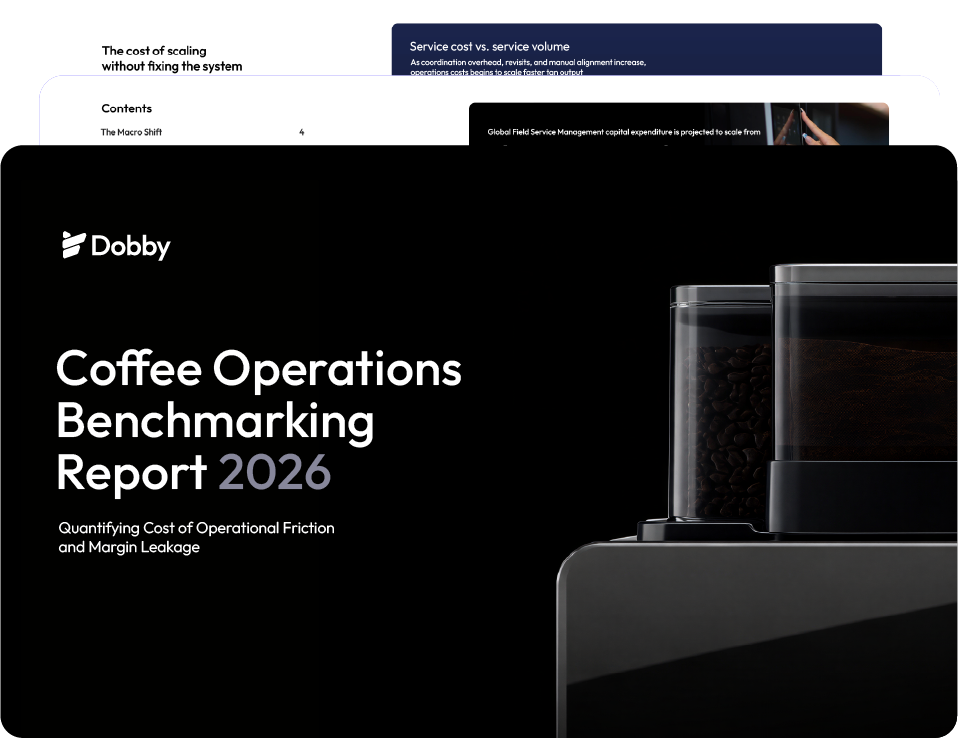
This article features findings from the 2026 Coffee Operations Benchmarking Report, analyzing the hidden costs of software fragmentation, app switching fatigue, and strategies to eliminate administrative coordination drag.
As enterprise technical fleets expand, leadership encounters a distinct operational paradox: rapid top-line growth frequently coincides with compressing margins. Every new coffee machine deployed introduces an exponential web of ongoing operational demands, spanning strict SLA compliance, emergency dispatches, spare parts tracking, and route optimization.
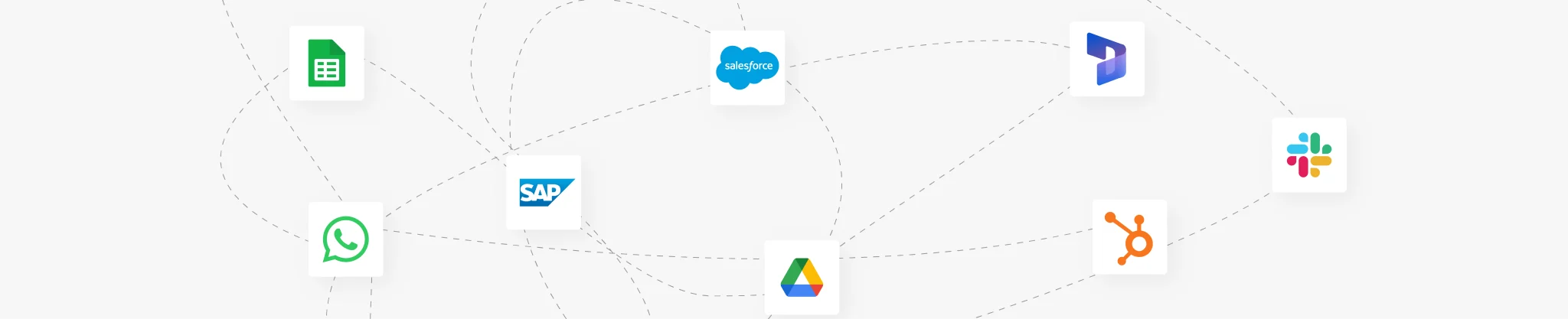
To manage this operational complexity, businesses typically procure specialized point solutions. Customer data lives in a CRM, service events are managed via a field service platform, inventory assets are tracked independently, and financial metrics sit in a legacy ERP.
Research from the 2026 Coffee Operations Benchmarking Report reveals that managing this complexity via decentralized point solutions creates systemic fragmentation, inducing an implicit 20% to 30% coordination tax that directly compresses operating margins.
What is the Interface Tax?
Enterprise operations rarely suffer from a lack of software capabilities. Instead, they face an architectural integration deficit.
When software architectures lack native integration, human labor serves as the bridging mechanism. Administrative staff and field coordinators manually realign workflows, verify cross-platform data integrity, and transfer operational context between incompatible systems.
57
Lost Daily Minutes
Time consumed simply by application switching and manual data migration across software interfaces.
7.5
Lost Daily Minutes
The average frequency at which personnel are forced to switch software interfaces to complete basic tasks
60%
Capacity Drag
Six out of every ten hours of labor are absorbed by process coordination rather than technical execution.
The Fallacy of Disconnected Application Stability
From a high level, localized software stability masks systemic cross-functional friction. Sales transactions are logged, service dispatches are tracked, and billing cycles conclude.
However, profitability compresses not because individual platforms fail, but because the labor required to sustain them scales non-linearly. Sector benchmarks show that while the optimal operational stack consists of roughly three core platforms, the average coffee enterprise runs between six and ten siloed tools.

Beyond this threshold, supplementary software yields diminishing returns, creating redundant workflows and asynchronous data that force teams to constantly reconcile discrepancies. In fact, 48% of field dispatches experience execution delays due to a lack of real-time cross-platform data synchronization.
The Real Cost of the Coordination Tax
For a typical mid-scale operator running 20 technicians and handling 50 service events per day, cross-system friction is an independent cost center:
Re-dispatch Penalties: Disconnected asset data forces a 20% to 30% rework rate, costing an estimated €237,000 annually in secondary visit variances.
Material Leakage: Unsynchronized inventory ledgers cause uncaptured parts billing and stock discrepancies, driving €10,000+ in direct inventory loss per €500K component throughput.
Total Annual Complexity Cost: Combined coordination overhead and labor variances accumulate to €585,000 per year in avoidable operational expenditure.
Eliminating the Tax with a Unified Core
Eliminating the interface tax cannot be achieved by procuring another point solution or writing custom API scripts. Sustainable scaling requires establishing a Unified Operating Layer engineered around end to end asset lifecycles.
Stop the interface tax
See How Software Fragmentation Costs Your Fleet €585k Annually