
Industry insights
Dynamic Dispatch: How Smart Route Planning Protects Coffee Fleet SLAs
18 Nov 2026

Written By Nikolaj Gaba
Share to
About the study
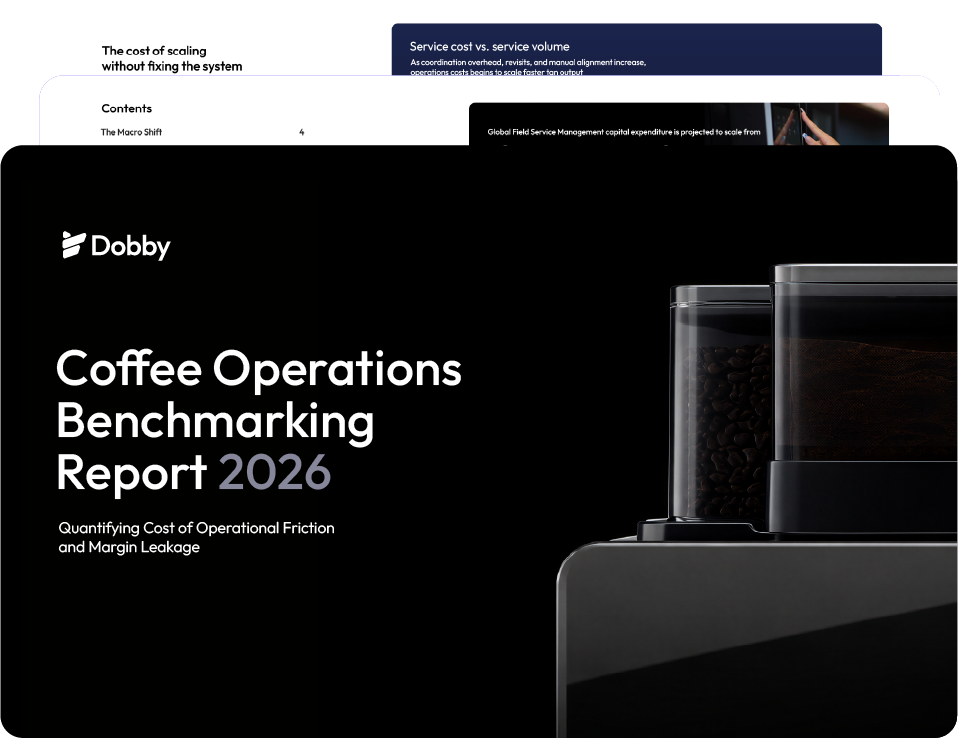
Data from the 2026 Coffee Operations Benchmarking Report, highlights how dynamic dispatching cuts technician transit time by up to 35% while increasing daily job capacity.
For commercial coffee fleet operators, back-office dispatching is often treated as a game of coordinate puzzle-solving.
When an emergency ticket drops or a preventive service window opens, dispatchers scramble through static calendars, trying to match open technicians with customer locations while factoring in traffic, parts availability, and skill certifications. In a high-urgency industry where service-level agreements (SLAs) demand a response within hours rather than days, manual dispatching creates massive operational drag.
Relying on static schedules and manual routing leads to wasted fuel, excessive windshield time, and missed SLAs. To protect service margins and hit strict morning-rush uptime targets, modern coffee fleet managers are moving to dynamic dispatch and skill-based route planning.
The Hidden Cost of Manual Dispatching
Traditional dispatching workflows break down under the unique pressures of commercial coffee operations due to two major bottlenecks:
The Skill Mismatch Penalty: Commercial espresso machines and super-automatic units span multiple complex OEM configurations. Sending a junior technician who lacks specific manufacturer certification results in low first-time fix rates and frustrating delays.
Geographic Inefficiency: Manual routing often groups jobs by simple proximity rather than live traffic, technician skill sets, and van inventory levels, leading technicians to crisscross metropolitan areas and burn billable hours in transit.
3 Core Capabilities of Dynamic Dispatching
Modern route optimization goes beyond simple map pins by integrating real-time operational data into every dispatch decision:
1. Automated Skill and Certification Matching
When a ticket is generated, the system automatically interrogates the machine make, model, and error code, matching the service requirement exclusively against technicians certified on that specific equipment. This ensures the right person arrives equipped to solve the problem on the first visit.
2. Intelligent Route Clustering and Optimization
Dynamic dispatching groups routine preventive maintenance calls and emerging service tickets into tight geographic and time-sensitive clusters. This minimizes daily drive time, reduces fuel overhead, and maximizes the number of billable jobs each technician can complete per shift.
3. Real-Time Priority Insertion
When an urgent morning emergency breaks out, the system calculates the optimal way to insert the high-priority ticket into existing routes without completely derailing scheduled preventive maintenance calls or breaching active customer SLAs.
Turning Back-Office Routing into a Competitive Advantage
Automating dispatch workflows unlocks immediate gains across your entire service department:
Maximized Technician Utilization: Proactive jobs fill natural lulls in daily call volume, keeping field staff productive without triggering high overtime expenses.
Protected SLA Performance: Fast, intelligent routing ensures emergency response targets are consistently met, safeguarding high-value commercial accounts from churn.
Seamless Field Hand-off: Technicians receive optimized routes and pre-kitted parts manifests directly on their mobile devices, keeping administrative friction to an absolute minimum.
Stop Fighting Traffic and Start Optimizing Operations
Upgrading your dispatch infrastructure transforms your service team from a reactive cost center into a streamlined, high-margin engine. By combining automated skill-matching with dynamic route optimization, fleet operators ensure maximum uptime and protect their most critical commercial relationships.
Intelligent dispatch
Stop Wasting Hours in Traffic and Automate Your Field Routing