
Running a coffee service operation means managing machines, customers, technicians, stock, and service performance across multiple sites. As the number of machines grows, so does the complexity.
Small teams often rely on spreadsheets, messaging apps, and basic CRMs, but these tools don’t scale with rising service demands.
That’s where the right coffee machine software can help.
In this guide, we’ll show you 7 key features to look for when choosing coffee machine software and some common mistakes that operators make when making this decision. By the end, you’ll also see why Dobby, an all-in-one platform for coffee companies, is the best choice.
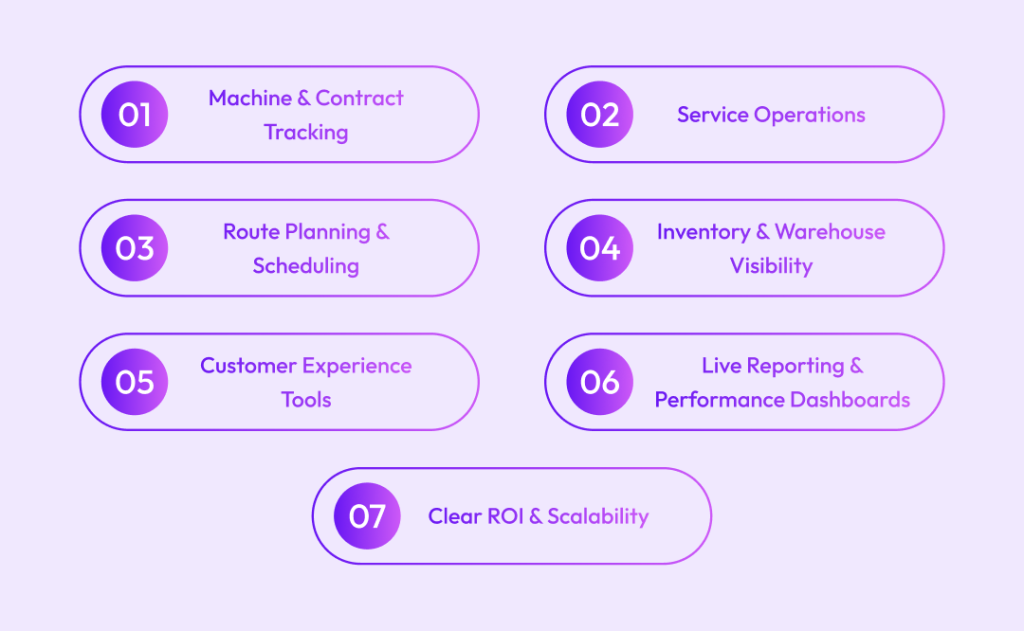
What coffee machine software should actually include: 7 key features to look for
Machine & contract tracking
The right coffee machine software should provide a digital profile for every coffee machine. This should include the location, service history, uptime, contract terms, and telemetry data.
This data should be connected with the customer and service records so you can see the full picture: how the machine performs, when it needs maintenance, and what the service agreement allows.
Even better, if it has QR code issue reporting and telemetry integrations, you can save hours of manual work and make preventive service possible.
Service operations
The next feature to look for is how it helps with actual service operations. The right software should make ticketing, scheduling, technician notes, SLA timers, and automated customer updates all part of one, connected workflow.
The best platforms provide technicians with all the job context, including machine history, spare part availability, and previous notes, before they even start their route. That’s how operators reduce repeat visits and increase first-time fix rates.
Route planning & scheduling
Routes planned by instinct might feel faster, but often cost more time and fuel, because they rarely account for the real-world constraints that service managers face daily.
When technicians are dispatched without considering traffic data, job duration, or skill alignment, they can end up wasting fuel, time, and technician capacity. Poorly planned routes also cause inconsistent SLA performance and customer frustration as service times become unpredictable.
The coffee machine software you choose should have smart routing that considers technician location, skill, and traffic data to build efficient routes automatically. It also shows real-time capacity, so you can balance workloads and avoid burnout.
We’ve seen teams achieve 20% less travel time and 30% faster responses, simply by planning routes better.
Inventory & warehouse visibility
The right coffee machine software also tracks your inventory. Because a missing part can derail the entire day of the technician. That’s why your software should show what’s in stock, where it is, and automatically reserve the right parts for upcoming jobs.
This prevents duplicate orders, return visits, and costly downtime. Integrating your warehouse with your service operations also keeps purchasing predictable and cash flow clearer.
Customer experience tools
Customers are at the core of any service business. The software you choose should understand that and have built-in customer experience tools like live technician tracking, automated notifications, and post-service feedback. With these tools, your clients can easily see service progress, and your team can use data to improve performance and prevent issues.
Live reporting & performance dashboards
Look for platforms with real-time dashboards that show your key performance metrics like SLA adherence , first-time fix rate, utilization, and ticket resolution times, all in one place.
This visibility makes it easier to monitor performance accurately, address issues quickly, and plan future workloads with confidence.
Clear ROI and scalability
The whole point of investing in a coffee machine service software is that it will pay for itself and help you make more money. So before buying, check how the system impacts travel time, technician utilization, repeat visits, and churn.
A well-built platform reduces admin hours, improves technician utilization, and gives leadership a clear line of sight into financial impact and growth potential.
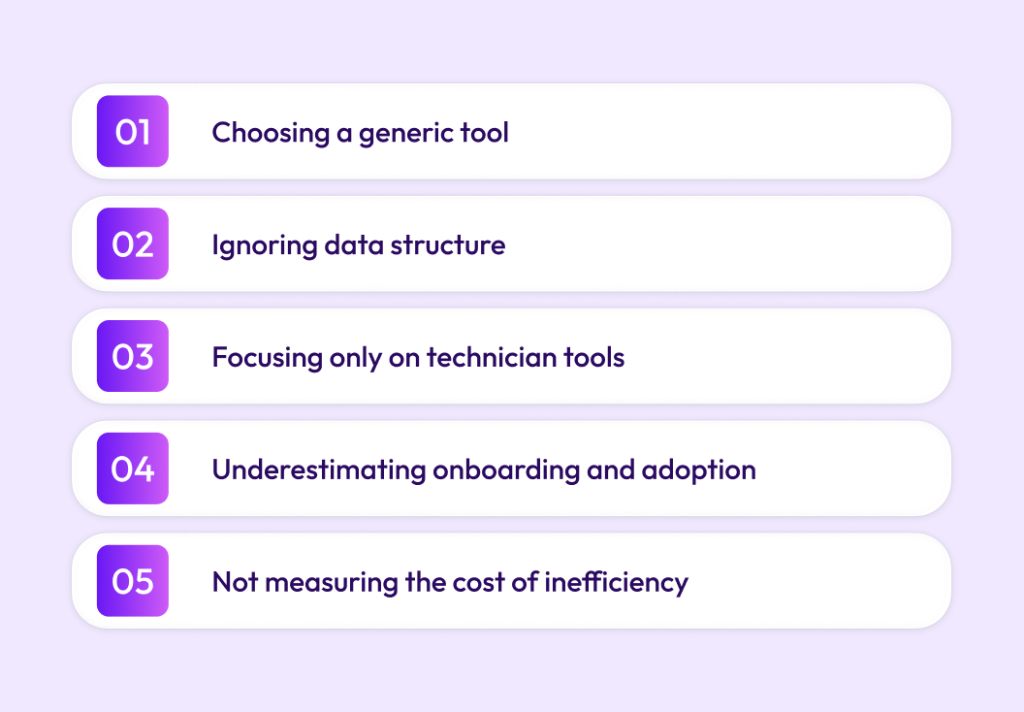
5 mistakes coffee operators make when choosing software
Choosing the right software for your coffee service business is one of the most important decisions you’ll make. Here are some common mistakes we’ve seen leaders make when making the decision.
1. Choosing a generic tool
Generic software like Salesforce or Dynamics 365 often misses the needs of coffee operators, from telemetry integrations to contract tracking and consumable sales.
As a result, teams end up building workarounds with spreadsheets or messaging apps to fill the gaps.
Before choosing, check whether the software was designed for the coffee and vending market and whether it can manage both machine data and service operations in one place.
2. Ignoring data structure
If your data sits in multiple tools and spreadsheets, it becomes nearly impossible to manage efficiently. Without a central data structure, key information like service history, part availability, or customer performance is fragmented. This slows decisions, increases admin, and causes repeated mistakes.
The right software should offer one shared database that updates in real time across departments, ensuring everyone, from service managers to sales reps, works with the same information.
3. Focusing only on technician tools
A technician app helps in the field, but it doesn’t solve the bigger operational challenge. Many businesses buy mobile apps for their field teams but forget to connect them to sales, stock, and reporting. The result is a disconnected business where field updates don’t sync with inventory or contracts.
Choose a platform that connects every workflow in your service business, so when a technician logs a repair, parts are automatically updated in the warehouse, and the customer record reflects the change.
4. Underestimating onboarding and adoption
New systems fail most often because teams aren’t trained or supported properly. Onboarding should include step-by-step setup, live guidance, and ongoing check-ins until the system becomes part of daily routines.
Ask providers how they handle user adoption, what support channels they offer, and how long implementation typically takes. This ensures your investment translates into real operational change.
5. Not measuring the cost of inefficiency
Looking only at software cost as your deciding factor gives you an incomplete picture. To allocate the right budget, consider how much fuel, technician time, and revenue opportunities are being lost each month at your business. Put them in numbers.
That’s your cost of inefficiency. A good platform should be able to fill those gaps, make those savings visible, and increase your profits.
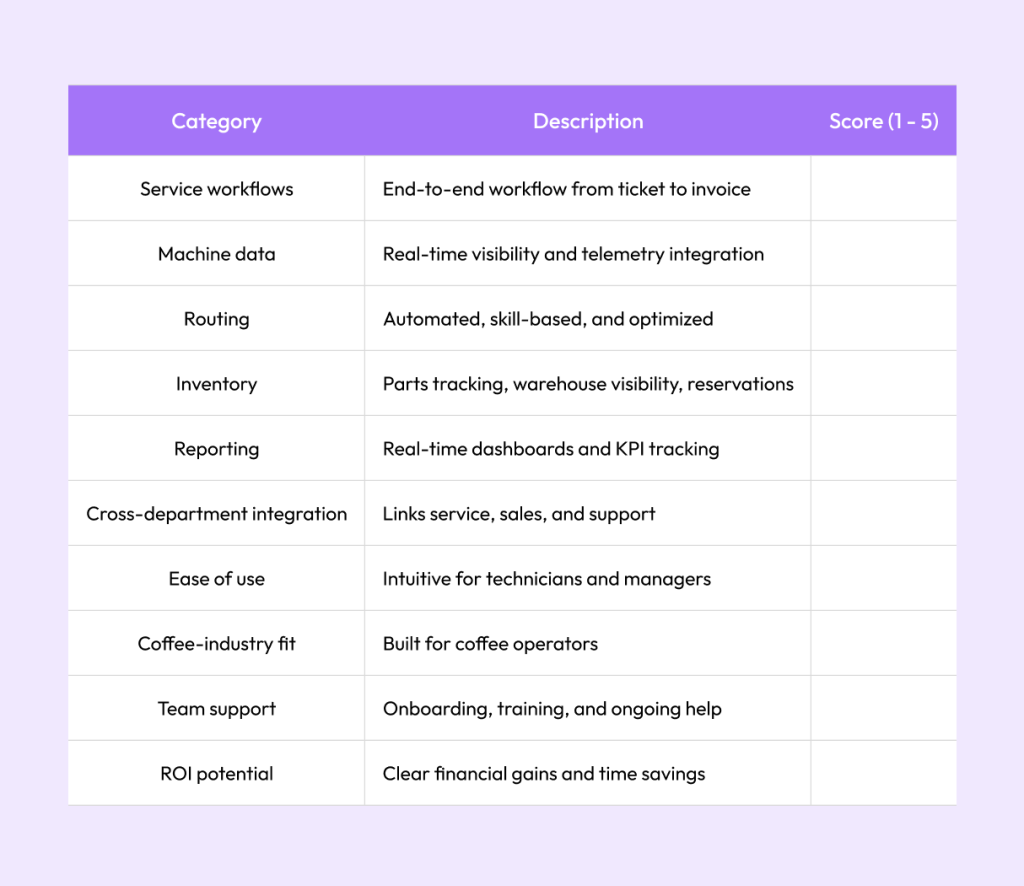
You can assign scores to each of these categories and make an informed choice based on the scores each tool gets.
Here’s a simple scorecard checklist of everything we’ve discussed to keep handy when you’re evaluating tools. Share it with your team to make the right choice.
How to choose the right coffee machine maintenance software
- How Dobby is a great alternative to Dynamics 365 for coffee operators.
- Dobby vs Salesforce: Which is right for your coffee service business?
Why Dobby is the best coffee machine maintenance software in 2026
Dobby is built specifically for B2B coffee and vending operators. Unlike generic service software, it centralizes every operational area from customer contracts to inventory, routing, and technician utilization into one clear system.
Service managers can see which machines are underperforming, how long tickets take to close, and whether parts or technicians are available before issues escalate.
Here’s what the expected gains look like for operators using Dobby:
,€4,950 monthly gain in technician efficiency through better scheduling and fewer idle hours.
€5,500 in fuel savings from optimized routes and reduced unnecessary travel.
€30,993 in additional invoicing captured each month by preventing missed or delayed jobs.
15.8x ROI ratio achieved within months thanks to faster turnaround times and improved customer retention.
Operators using Dobby gain a single, reliable system that cuts admin work, strengthens team performance, and gives management a clear view of profitability.
See how Dobby works in practice. Book a call with our experts today.