Industry insights
Field Operations
Automated Preventive Maintenance: Stopping Coffee Machine Breakdowns Before They Happen
6 Nov 2026

Written By Nikolaj Gaba
Share to
About the study
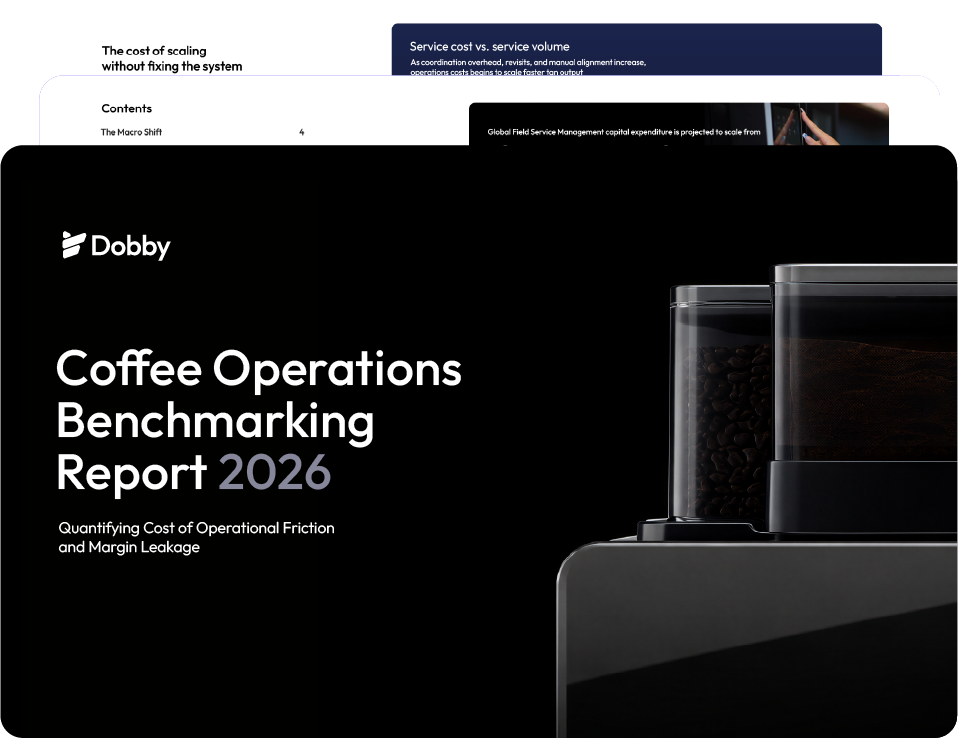
Data from the 2026 Coffee Operations Benchmarking Report, reveals how automated preventive maintenance cuts emergency dispatches by up to 40% while raising first-time fix rates.
For commercial coffee fleet operators, waiting for equipment to break down before dispatching a technician is a costly strategy.
When a commercial espresso machine or high-throughput super-automatic unit fails unexpectedly, it triggers a chain reaction of operational drag. Dispatchers scramble to find available emergency slots, technicians arrive without the required wear-and-tear parts, and clients deal with frustrating downtime during peak morning rushes.
Relying on customers to notify you when hardware fails turns your client base into an informal alarm system. To protect long-term account renewals and control operating costs, modern fleet managers are replacing reactive firefighting with automated, usage-based preventive maintenance.
The True Cost of Reactive Maintenance
Emergency service calls carry hidden expenses that destroy profit margins across three primary areas:
1. Unplanned Dispatch Drag:
Reactive calls disrupt pre-planned technician schedules, forcing dispatchers to reroute field staff inefficiently and pay premium overtime rates.
2. Parts Inefficiency:
Unscheduled repairs frequently lead to low first-time fix rates because technicians carry standard stock rather than the exact rebuild kit needed for a specific machine failure.
3. Unsilent Churn:
Commercial clients rarely break contracts over routine maintenance. They cancel when repeated unexpected outages disrupt their daily revenue.
3 Pillars to Unlock +1 Job Per Tech Every Day
To turn wasted drive time into completed revenue-generating tickets, fleet operations require an automated dispatch and route optimization model.
1. Automated Skill and Proximity Dispatch:
Instead of relying on back-office coordinators to manually assign tasks, leverage dynamic dispatching. The platform evaluates ticket priority, technician location, skill set, and inventory on hand to assign jobs instantly.
2. Live Dynamic Route Optimization:
Traffic and urgent emergency calls happen continuously. Static daily schedules quickly break down. Dynamic routing automatically adjusts travel sequences based on live field conditions, cutting unnecessary mileage and keeping technicians on the fastest path between jobs.
3. Pre-Arrival Asset Context:
Equip technicians with complete asset visibility before they turn the ignition key. When a tech knows the exact machine history, previous fault codes, and required spare parts before arriving, on-site diagnostics take minutes instead of hours – improving first-time fix rates and shortening job completion times.
3 Triggers for Automated Preventive Maintenance
Static calendar-based reminders, such as scheduling a visit every six months regardless of usage, fail because machine wear correlates with volume, not time. Modern platforms automate maintenance triggers using real-time machine data:
1. Volume and Shot Count Thresholds
Tracking actual drink cycles allows the platform to schedule service right as key components reach their operational limits. Replacing group head seals, shower screens, and valve assemblies after specific shot intervals prevents catastrophic leaks before they occur.
2. Water Filtration and Hardness Tracking
Scale buildup remains the single largest cause of commercial coffee machine failure. Automating filter replacement alerts based on localized water hardness and cumulative throughput prevents scale accumulation, protecting heating elements and boilers from sudden failure.
3. Component Lifecycle Monitoring
Every major sub-assembly, from grinder burrs to solenoid valves, has a known lifespan. Automated component tracking flags wearing parts during routine visits, enabling technicians to swap them proactively before they cause secondary machine damage.
Integrating Maintenance with Van Stock and SLA Governance
Automating preventive service routines unlocks major efficiencies across your broader field operations:
Automated Van Stock Reservation
When a preventive maintenance job is generated, required parts kits are automatically allocated from the technician’s van stock in advance, guaranteeing high first-time fix rates.
Balanced Dispatch Schedules
Proactive jobs can be assigned during natural lulls in daily call volume, maximizing technician utilization without triggering overtime.
SLA Protection
Keeping equipment running at peak performance eliminates surprise outages, making strict contract SLAs easy to achieve.x.
Move from Reactive Firefighting to Proactive Operations
Stopping breakdowns before they start transforms your service department from a cost center into a key driver of client retention. By tracking machine health automatically, fleet operators ensure maximum uptime, protect high-value commercial contracts, and keep service margins strong.
Proactive fleet management
Stop Reacting to Emergency Breakdowns and Fix Machine Faults Before Anyone Calls