Industry insights
Field Operations
Reclaiming Capacity:
How to Get +1 Job Per Tech Daily
10 Oct 2026

Written By Nikolaj Gaba
Share to
About the study
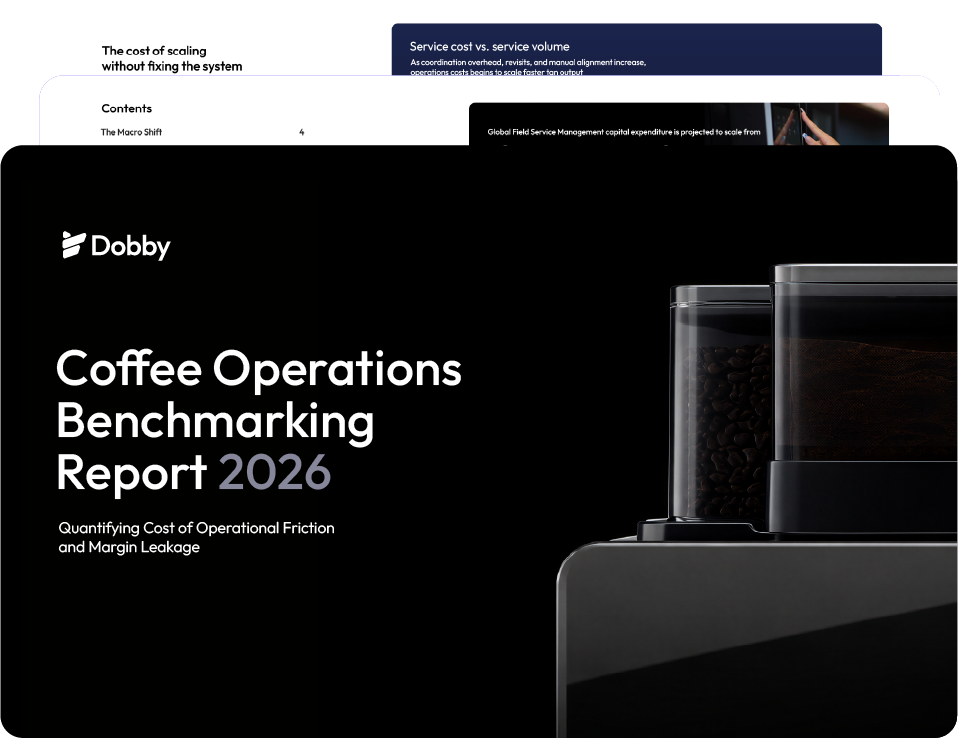
This article draws key insights from the 2026 Coffee Operations Benchmarking Report,analyzing how manual dispatch friction, static routing, and asset context gaps drain daily field productivity.
For commercial coffee fleet operators, technician time is the ultimate perishable resource. Once an hour is lost to morning dispatch delays, traffic detours, or searching for machine manuals, that capacity is gone forever.
When demand grows, most fleet leaders assume they only have two choices: hire more technicians or turn down new service accounts.
However, the bottleneck usually isn’t team size – it’s drive-time drag and manual scheduling friction. Across the industry, field technicians spend up to 40% of their workday sitting in traffic, waiting for assignment updates, or returning to the warehouse for forgotten parts.
Reclaiming just 45 to 60 minutes of lost time per technician every day unlocks a full extra job completed per tech—without adding a single dollar to your payroll.
The Silent Capacity Killers in Field Operations
Why do highly skilled technicians end up completing fewer jobs than planned? The loss happens in small, unnoticeable increments throughout the shift:
1. Manual Dispatch Delays:
Dispatchers spending the first hour of every morning manually matching tickets to spreadsheets and messaging apps.
2. Suboptimal Route Planning:
Assigning tickets based on static regions rather than real-time traffic conditions and dynamic proximity.
3. Lack of Asset Context:
Technicians arriving on-site without knowing the exact machine model (e.g., Franke A-800 vs. Eversys Cameo), water filtration setup, or service history, leading to unnecessary back-and-forth.
3 Pillars to Unlock +1 Job Per Tech Every Day
To turn wasted drive time into completed revenue-generating tickets, fleet operations require an automated dispatch and route optimization model.
1. Automated Skill and Proximity Dispatch:
Instead of relying on back-office coordinators to manually assign tasks, leverage dynamic dispatching. The platform evaluates ticket priority, technician location, skill set, and inventory on hand to assign jobs instantly.
2. Live Dynamic Route Optimization:
Traffic and urgent emergency calls happen continuously. Static daily schedules quickly break down. Dynamic routing automatically adjusts travel sequences based on live field conditions, cutting unnecessary mileage and keeping technicians on the fastest path between jobs.
3. Pre-Arrival Asset Context:
Equip technicians with complete asset visibility before they turn the ignition key. When a tech knows the exact machine history, previous fault codes, and required spare parts before arriving, on-site diagnostics take minutes instead of hours – improving first-time fix rates and shortening job completion times.
Scale Revenue, Not Headcount
Unlocking field capacity isn’t about rushing your field team or cutting corners on machine maintenance. It’s about removing the operational friction that prevents them from doing their best work. By streamlining dispatching and optimizing travel routes, fleet operators can scale job volume, satisfy customer SLAs, and protect profit margins.
Reclaim field hours
Stop Losing Up to 40% of Your Field Capacity to Drive-Time Drag